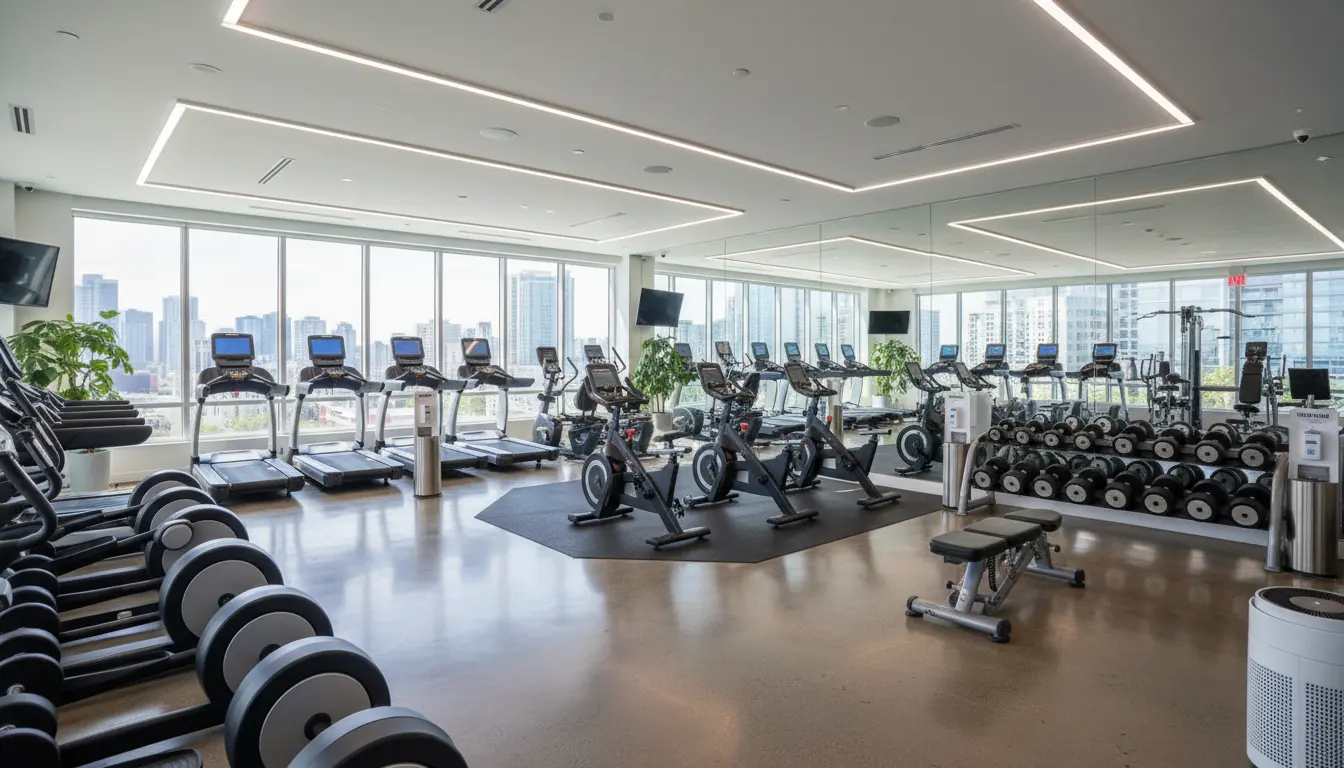
A gym can look clean and still carry sweat, skin oils, bacteria, and residue from hundreds of hands in a single day. The real question is not whether gym equipment needs cleaning. It is how often it should happen, who should do it, and what level of cleaning makes sense for each area.
For most gyms, equipment should be wiped down after every use, high-touch surfaces should be cleaned several times a day, and a deep clean should occur at least daily. Busy facilities may need more frequent cleaning, especially during peak hours, flu season, or after group classes.
This article is informational only and is not a substitute for public health or infection control advice. Gyms should follow current local guidance and the instructions on cleaning product labels.
Gym equipment should be wiped after every use.
The simplest rule is still the most effective. Any surface touched during a workout should be wiped down before the next person uses it.
That includes:
- Dumbbells, kettlebells, and barbells
- Weight machine handles and adjustment pins
- Bench pads and seat pads
- Treadmill rails and control panels
- Exercise bike handles and screens
- Rowing machine handles and foot straps
- Mats, balls, bands, and shared accessories
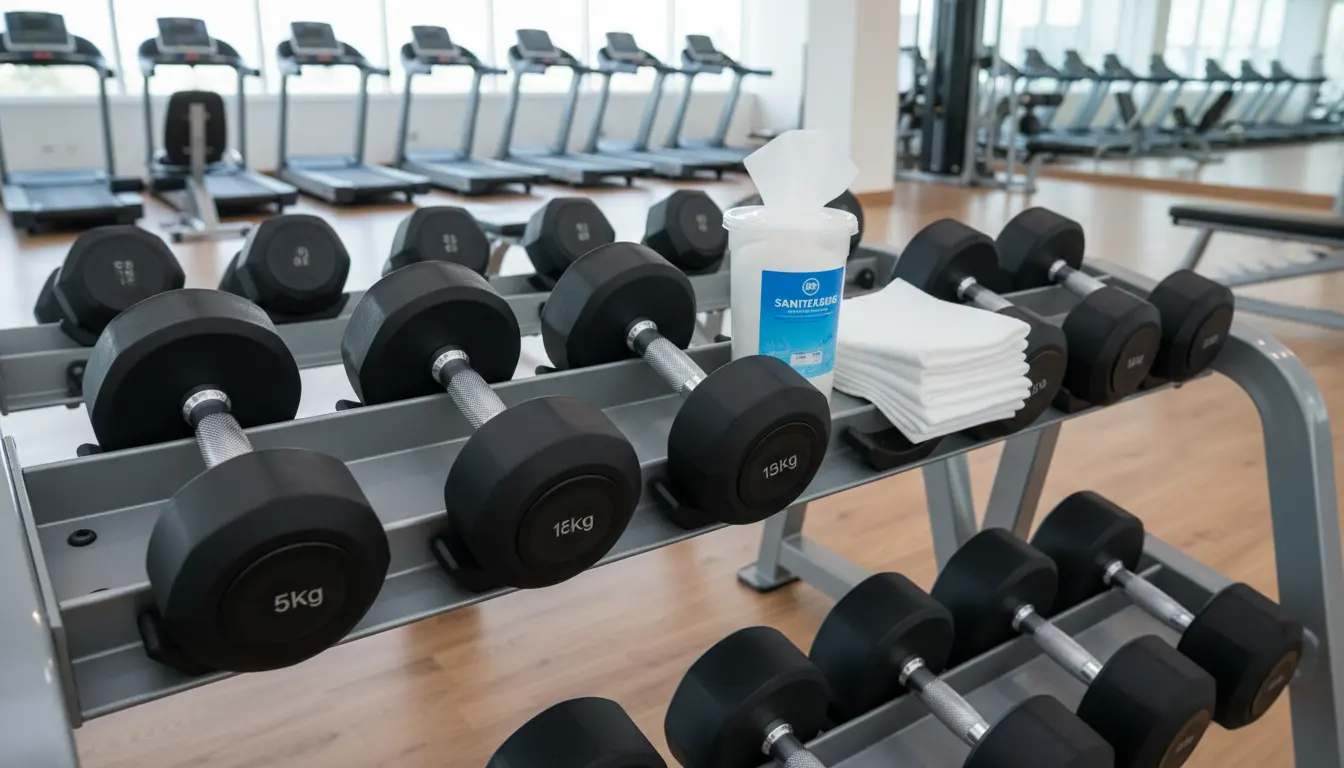
This does not mean a full staff clean after every set. In most gyms, members should use the wipes or spray provided to clean contact points when they finish. Staff should support this by keeping cleaning stations stocked, visible, and easy to use.
Clear signs help. A simple message such as “Please wipe equipment after use” works better than a long list of rules. It keeps the standard obvious and normal.
Member wipe-downs do not replace staff cleaning, though. They are the first layer of hygiene, not the full system.
High-touch equipment needs staff attention throughout the day.
Busy gyms need a routine that runs during opening hours. Some equipment is touched so often that relying on members alone is not enough.
Staff should check and sanitise high-touch areas several times daily, with more attention during peak periods. Early mornings, lunchtime sessions, after-work rushes, and evening classes usually create the highest turnover.
The main high-touch points include:
- Door handles and entry gates
- Lockers and changing room benches
- Water refill points
- Cardio machine screens and buttons
- Cable machine handles
- Free weight grips
- Studio equipment after classes
- Reception counters and payment terminals, if used
A small gym may manage this with scheduled rounds every few hours. A larger gym may need cleaning staff on the floor throughout the day.
The aim is consistency. A written rota helps staff know what to clean, when to clean it, and how to record it. It also reassures members that hygiene is being taken seriously.
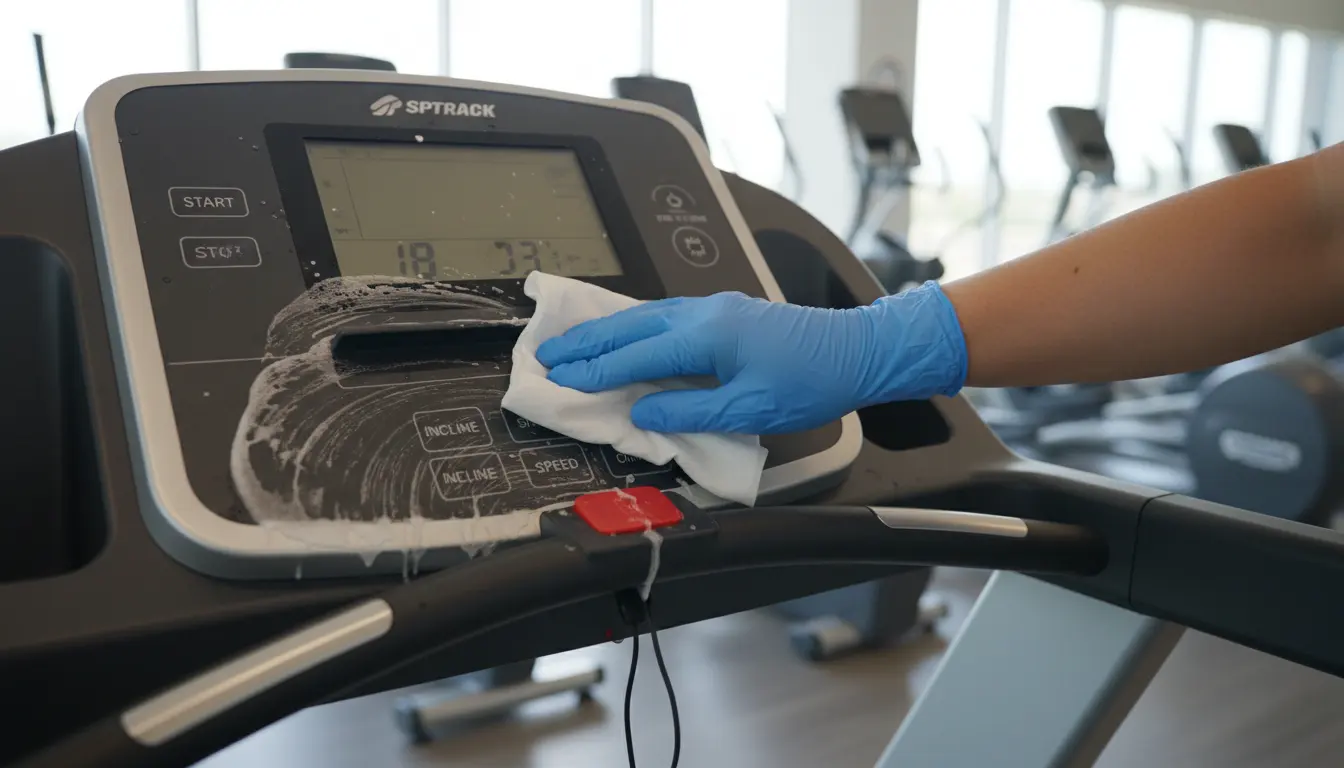
A daily deep clean should cover the whole facilit.y
Every gym should have a more detailed clean at least once a day. This is usually done before opening, after closing, or during a quieter period.
Daily cleaning should go beyond the obvious hand contact points. It should cover sweat, dust, floor dirt, spillages, and areas that members rarely clean properly after use.
A daily deep clean should include:
- Full wipe-down of machines, benches, and racks
- Cleaning underneath and around equipment
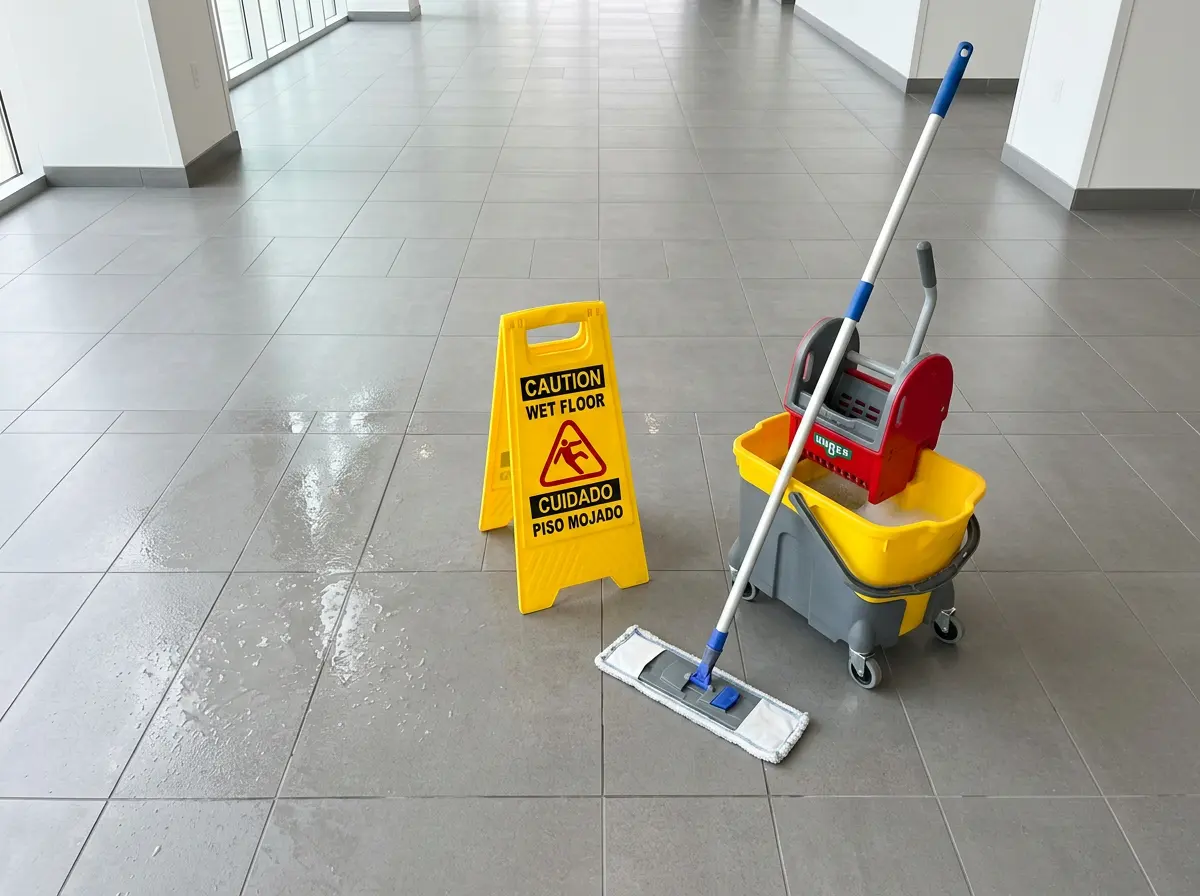
- Mopping hard floors with suitable products
- Vacuuming or cleaning rubber flooring where appropriate
- Cleaning mirrors and glass
- Washing mats and soft accessories if the material allows
- Emptying bins and replacing liners
- Cleaning toilets, showers, and changing areas
- Restocking soap, paper towels, wipes, and sanitiser
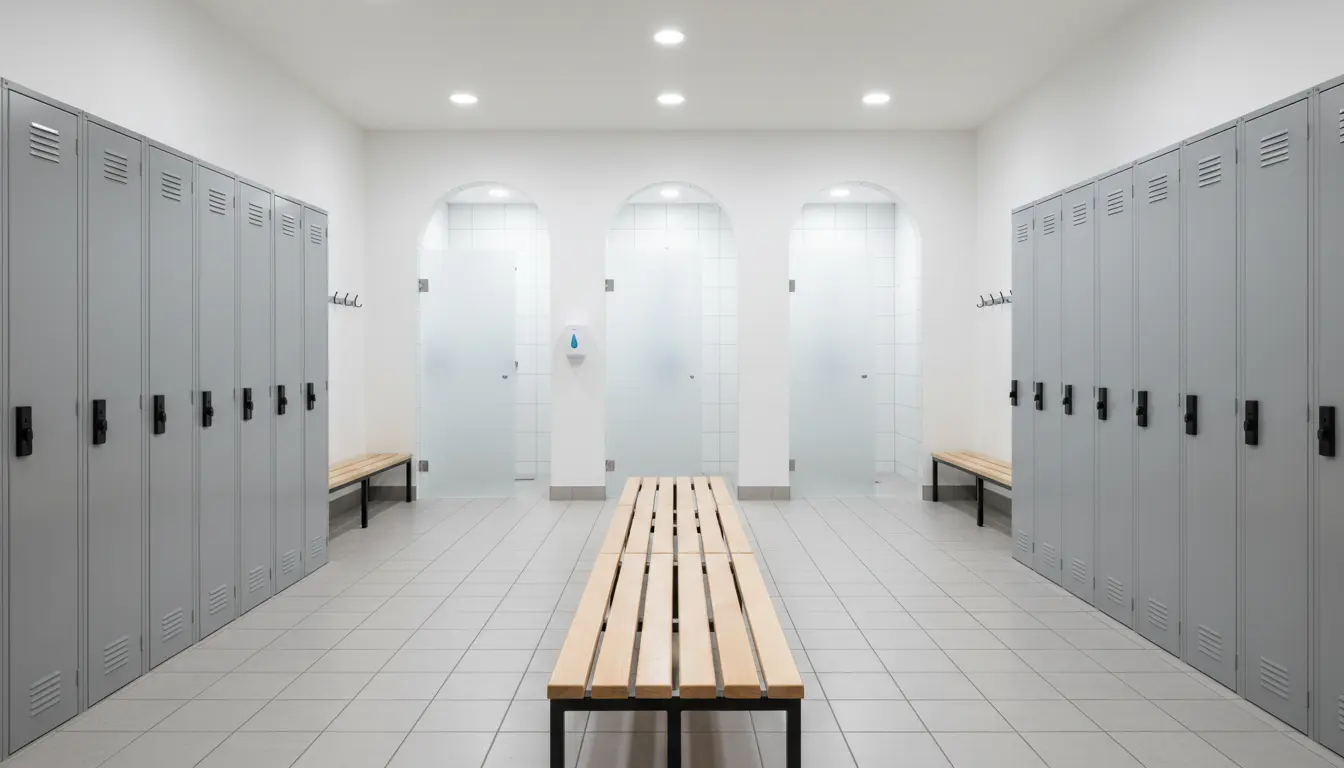
Changing rooms deserve special attention. Warm, damp spaces can quickly become unpleasant if not maintained. Showers, drains, benches, lockers, taps, and floors should be part of the daily routine, with more frequent checks during the day.
A deep clean is also the time to inspect equipment. Loose grips, damaged pads, cracked mats, or broken spray bottles can all weaken the hygiene standard.
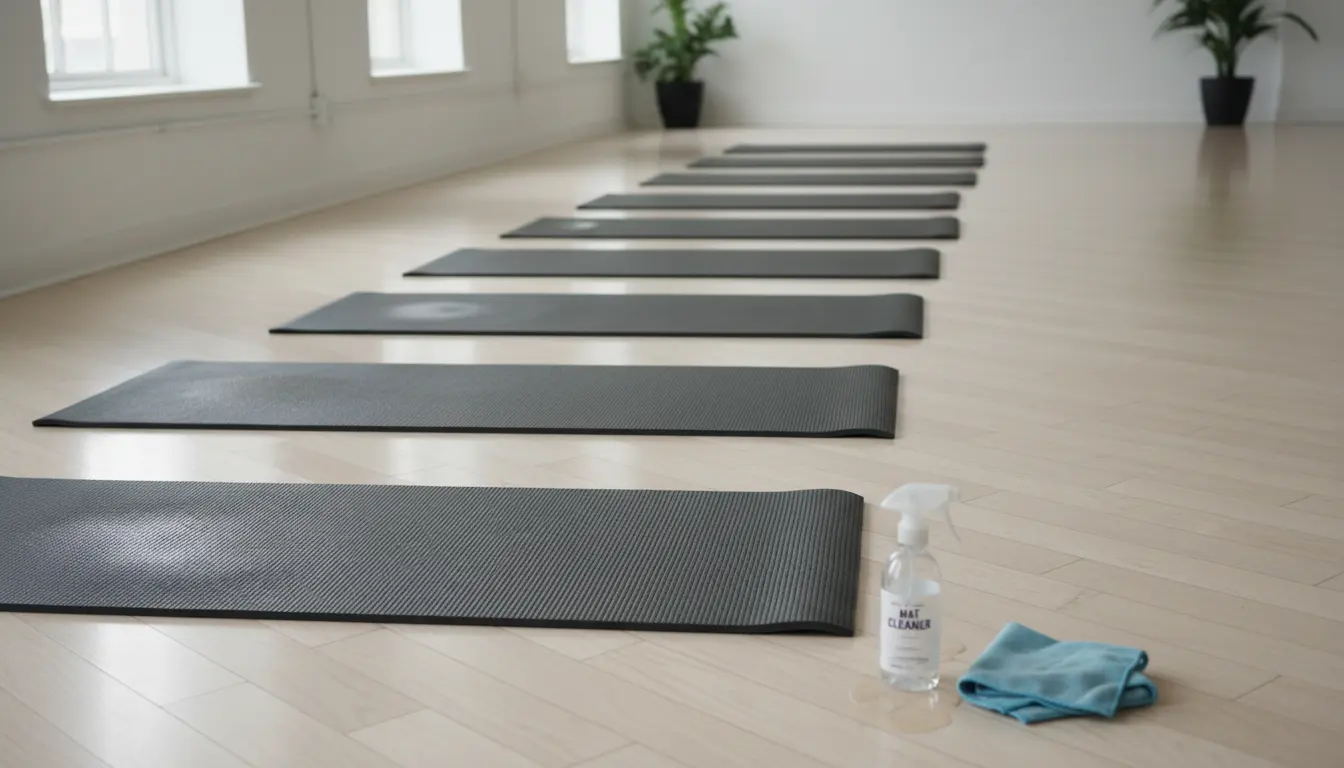
Some areas need cleaning after each class or session.
Group fitness spaces work differently from the main gym floor. One class can involve many people using mats, steps, weights, resistance bands, bikes, or boxing pads in a short time.
For that reason, shared studio equipment should be cleaned after every class. The room itself may also need a quick reset between sessions.
Good practice includes:
- Leaving enough time between classes for cleaning
- Asking members to wipe down their own station
- Having staff check anything missed
- Separating clean and used mats where possible
- Allowing damp equipment to dry before storage
- Cleaning microphones, remotes, and instructor controls
This applies to spin studios, yoga rooms, strength classes, reformer spaces, boxing areas, and small-group training zones. Any class that uses shared equipment needs a clear cleaning process built into the timetable.
The right frequency depends on gym traffic and ris.k
There is no single schedule that fits every facility. A quiet private training studio does not have the same cleaning needs as a 24-hour commercial gym.
Cleaning frequency should reflect:
- How many members use the gym each day
- How long the gym is open
- How much equipment is shared
- Whether classes run back to back
- The size of the changing rooms
- Seasonal illness levels
- Ventilation and airflow
- The age and condition of equipment
As a practical baseline, many gyms can work from this pattern:
Area or item
Suggested frequency
Equipment touched during workouts
After every use
Cardio screens, rails, and handles
Several times daily
Free weights and machine handles
Several times daily
Studio equipment
After each class
Toilets and changing rooms
Several checks daily, plus deep clean
Whole gym floor
Daily deep clean
Low-touch areas and storage spaces
Weekly or as needed
Products matter too. Use cleaning products that are suitable for the surface and follow the contact time on the label. Some disinfectants need to stay wet on the surface for a short period to work properly. Wiping them off too quickly may reduce their effect.
Avoid harsh products on screens, pads, timber, specialist flooring, or rubber unless the manufacturer says they are safe. Damaged surfaces are harder to clean and can become a hygiene problem in themselves.
A good cleaning routine is easy to see
Members judge a gym’s hygiene by what they can see, smell, and experience. If wipes are empty, bins are overflowing, or benches feel sticky, confidence drops quickly.
A strong routine is visible without being intrusive. That means:
- Cleaning stations are easy to find
- Staff clean during the day, not only after closing
- Rubbish is removed before it builds up
- Spray bottles and wipes are kept full
- Signs are short and clear
- Cleaning logs are used by staff
- Equipment is arranged so surfaces can be reached
The best systems make the right behaviour easy. Place wipes near free weights, machines, cardio areas, and studios. Put bins close to cleaning stations. Keep spare supplies nearby so staff can refill them quickly.
The takeaway for gym hygiene
Gym equipment should be sanitised after every use, cleaned by staff throughout the day, and included in a proper daily deep clean. High-touch areas and group class equipment need extra attention because they pass through many hands quickly.
The best routine is simple, visible, and consistent. Members should wipe what they use. Staff should clean what everyone touches. Managers should make sure the schedule, supplies, and training are in place every day.
A clean gym is not created by one big clean at closing time. It comes from small habits repeated all day, backed by a clear plan that everyone can follow.
Keep your gym clean, safe, and welcoming with professional cleaning from Effective Cleaning Services. Contact us today to book a cleaning service or visit our page to learn more about our professional cleaning solutions.