A missed handwash, an uncleared spill, or a shared towel can seem small. For a healthy adult, it may cause no harm. For an older person, someone with a weaker immune system, or a resident living with complex health needs, it can raise the risk of infection quickly.
Good hygiene is not just about keeping a care setting tidy. It protects dignity, lowers avoidable risk, and helps residents feel safe in the place they call home. Effective Cleaning Services provides professional cleaning support to help care settings maintain clean, hygienic, and welcoming environments. This article is informational only and should sit alongside local infection prevention guidance, clinical advice, and each resident’s care plan.
Hygiene starts with the people most at risk
Vulnerable residents are not all vulnerable in the same way. Some may have long-term illness. Some may recover slowly from infection. Others may find it hard to communicate symptoms, wash independently, or understand infection control steps without support.
That means hygiene plans should never be one-size-fits-all. They should reflect daily life in the setting.
Residents may need extra protection if they:
- Have reduced mobility or spend long periods in bed or seated
- Need support with toileting, continence care, or personal washing
- Have wounds, catheters, feeding tubes, or other clinical needs
- Live with dementia or cognitive impairment
- Share dining, bathing, or activity spaces with others
- Have frequent visitors or appointments outside the home
The aim is not to create a cold or clinical atmosphere. The aim is to build quiet, consistent habits that reduce risk without taking away independence.
A resident who can wash their own hands should be encouraged to do so. A resident who needs help should receive that help in a calm, respectful way. Hygiene works best when it supports autonomy rather than replacing it.
Hand hygiene remains the first line of defence
Hand hygiene is simple, but it is also easy to miss when a day gets busy. Staff, residents, visitors, and contractors all bring germs into shared spaces.
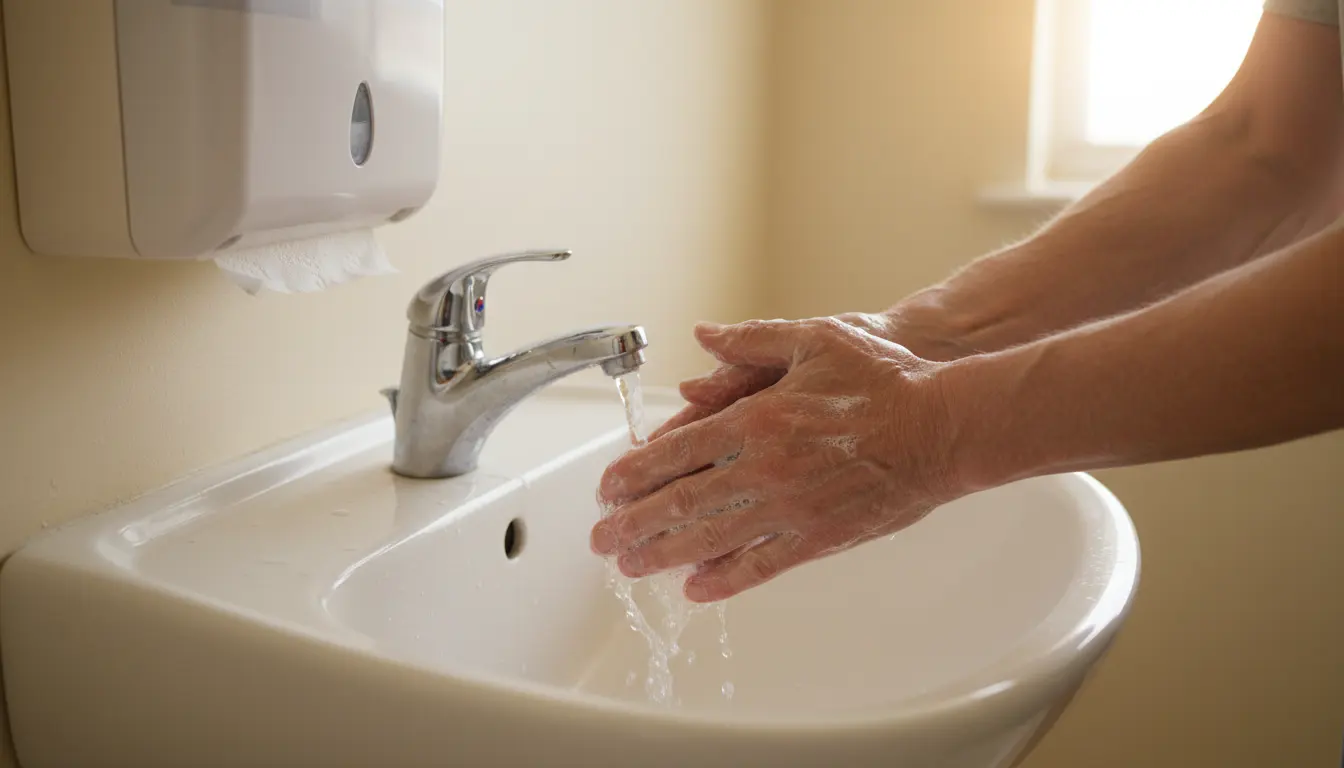
Handwashing with soap and water is needed when hands are visibly dirty, after using the toilet, after contact with body fluids, and before eating or preparing food. Alcohol hand gel can be useful when hands are clean but may have picked up germs from touching surfaces.
The most important moments include:
- Before and after personal care
- Before meals, medication support, or food handling
- After toileting or continence care
- After coughing, sneezing, or using tissues
- After handling laundry, waste, or cleaning cloths
- After touching high-contact surfaces in shared areas
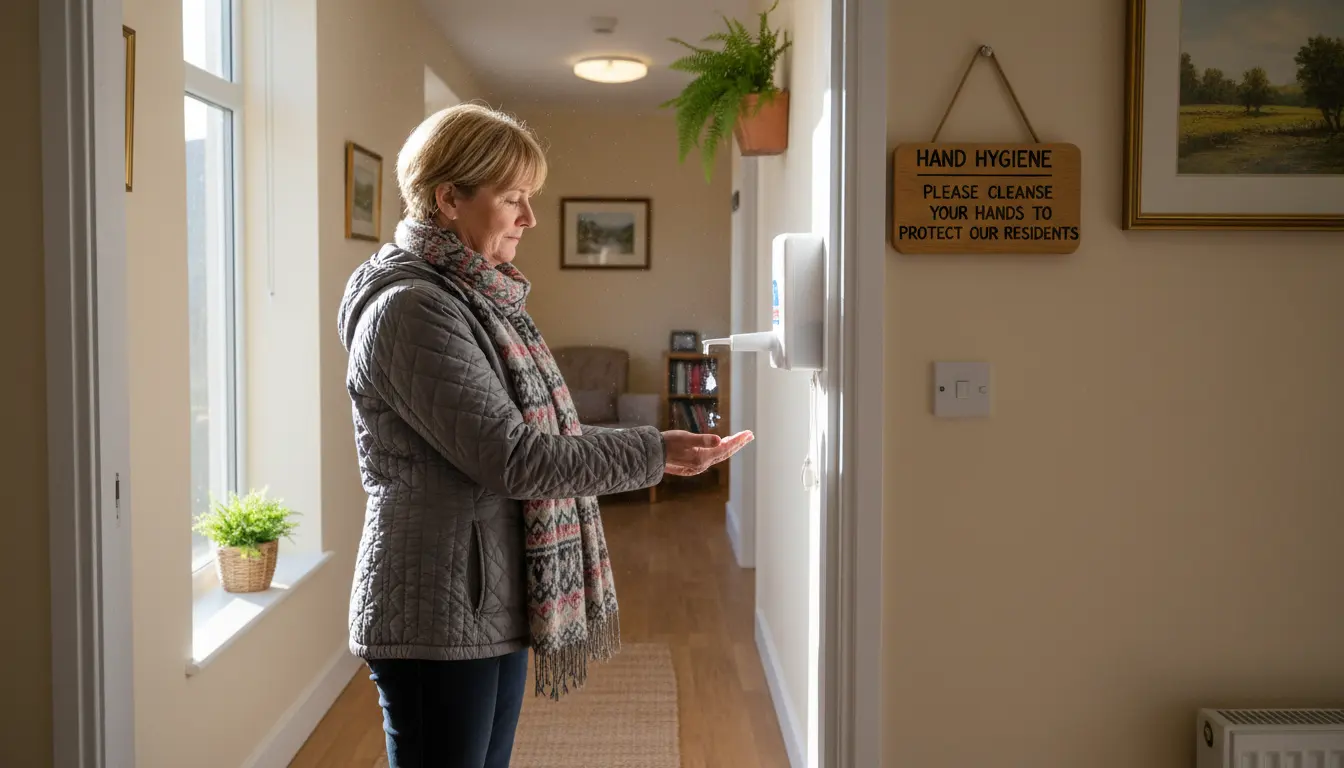
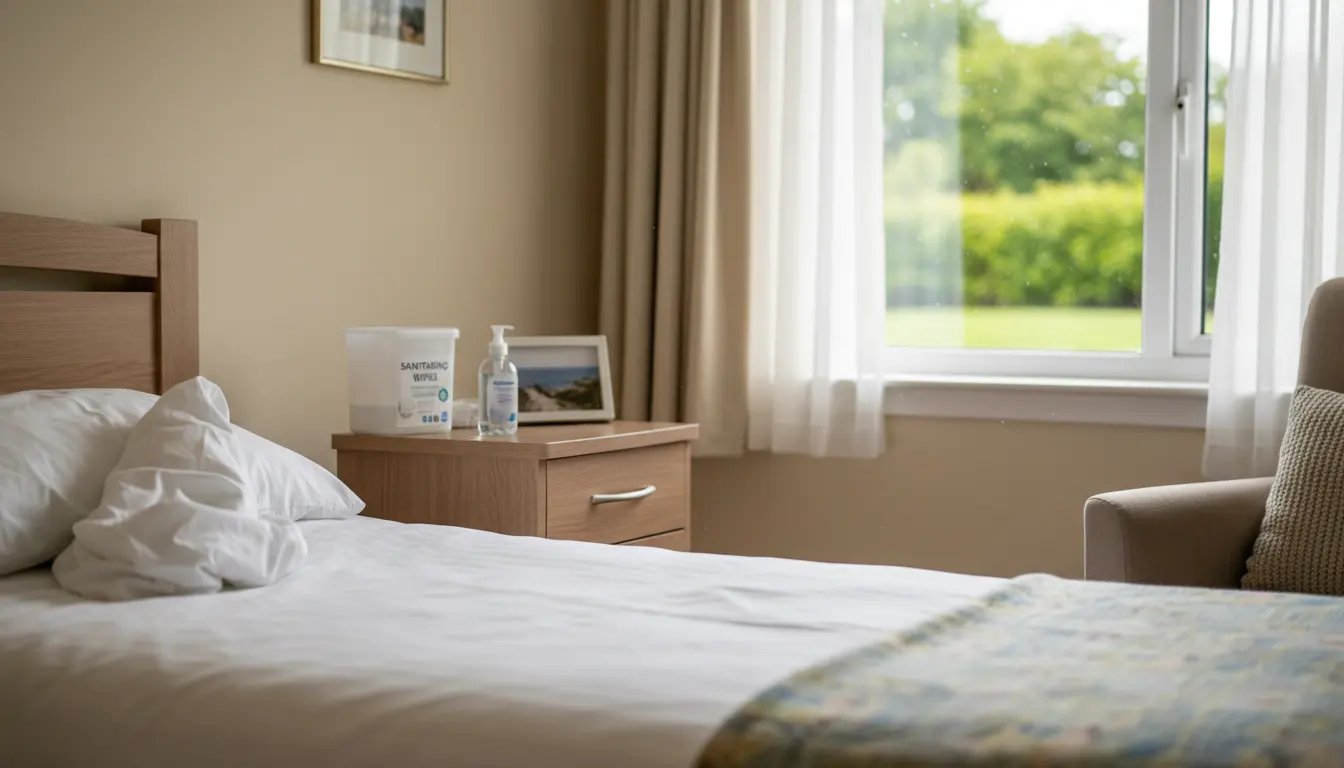
Hand hygiene stations should be easy to find, but placement matters. Gel at the front door helps visitors. Soap, paper towels, and bins near sinks help staff and residents complete the full routine. If towels are reusable, each person needs their own, and laundering must be reliable.
Signs can help, but they should not do all the work. A faded poster above a sink will not change behaviour on its own. Gentle reminders, role modelling, and clear routines make a bigger difference.
For residents with dry or fragile skin, frequent washing can cause soreness. Skin care should form part of hygiene planning. Mild soap, moisturiser, and staff awareness can help protect the skin barrier while maintaining cleanliness.
Cleaning routines should focus on touch points
A room can look clean and still carry risk. Germs often sit on the places people touch repeatedly, not only on visible dirt.
High-touch areas need regular attention, especially in shared spaces. These include:
- Door handles and push plates
- Handrails and grab rails
- Light switches
- Remote controls
- Call bells
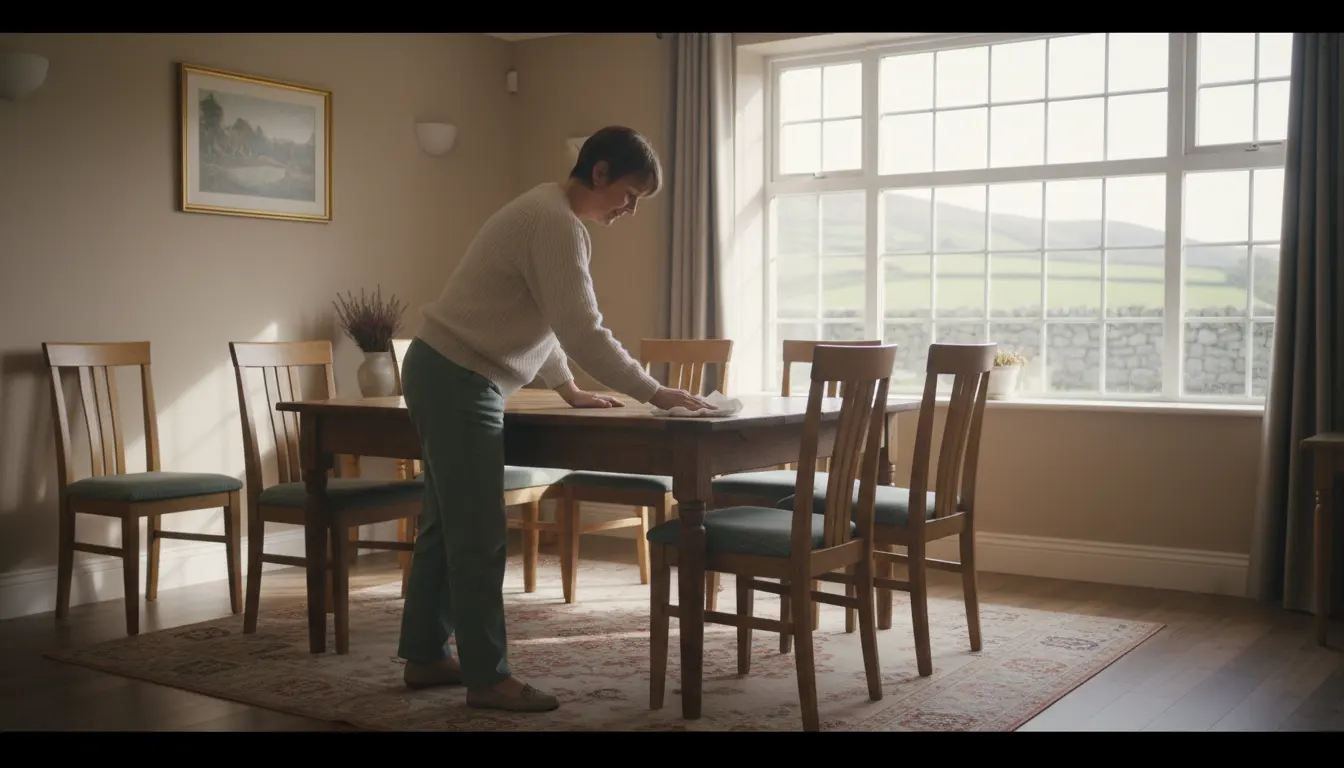
- Dining tables and chair arms
- Toilet flush handles and taps
- Mobility aids, where cleaning is safe and appropriate
Cleaning should follow a clear order. Start with cleaner areas and move towards dirtier areas. Use the right product for the task. Keep cleaning cloths separate for bathrooms, kitchens, bedrooms, and communal spaces. Colour coding can help, but only if everyone understands the system.
Contact time matters. Many disinfectants need to stay wet on a surface for a set time to work properly. Wiping them off too quickly can reduce their effect. Staff should follow the product label and local policies.
Shared equipment deserves special attention. Hoists, wheelchairs, shower chairs, blood pressure cuffs, and activity materials can move from one resident to another. They need cleaning between uses where appropriate, without damaging the equipment.
Cleaning records can help, but they should not become paperwork for its own sake. A useful record answers three questions:
Area
What needs checking
Why it matters
Bedrooms
Surfaces, bins, bedding, touch points
Protects personal space and comfort
Bathrooms
Toilets, taps, rails, floors
Reduces contamination risk
Dining areas
Tables, chairs, serving surfaces
Supports safer meals
Shared equipment
Items used by more than one resident
Limits transfer between people
Personal care needs privacy and consistency
Personal hygiene is deeply personal. Residents may feel embarrassed when they need help with washing, oral care, dressing, continence care, or changing clothes. Good practice protects both health and dignity.
Staff should explain what they are doing, seek consent where possible, and give residents time to take part. Even small choices matter, such as which towel to use, what clothing to wear, or whether they prefer a wash in the morning or evening.
Key routines include:
- Daily support with washing based on need and preference
- Regular oral care, including dentures where used
- Prompt continence care with safe disposal of waste
- Clean clothing and bedding when soiled
- Safe skin checks during personal care, where this is part of the plan
Gloves and aprons have a place, especially when contact with body fluids is likely. They do not replace hand hygiene. Hands should be cleaned before putting on gloves and after taking them off.
Laundry also needs careful handling. Soiled items should not be shaken, as this can spread particles into the air. Bags, machines, temperatures, and detergents should follow local guidance. Clean laundry should stay separate from used laundry from collection through to storage.
Visitors should be part of the hygiene culture.
Visitors bring warmth, connection, and routine. They can also bring winter viruses, stomach bugs, and other infections into a setting. The answer is not to make visiting feel difficult. The answer is to set clear, fair expectations.
Good visitor hygiene includes:
- Cleaning hands on arrival and before leaving
- Staying away when unwell
- Following guidance during outbreaks
- Using tissues and bins properly
- Avoiding sitting on beds unless invited and appropriate
- Checking before bringing food, flowers, or shared items
Clear communication helps. A friendly sign at the entrance, a reminder from staff, and visible hand gel can prevent awkward conversations later. During outbreaks, visiting arrangements may need to change. Residents and families should receive plain explanations, not vague instructions.
Better hygiene depends on habits, not panic.
The strongest hygiene systems are calm, repeatable, and understood by everyone. They do not rely on one person remembering everything. They make the right action easy.
That means supplies must be available before they run out. New staff need practical induction, not just a policy to read. Residents need support that respects their pace. Families need simple guidance. Managers need to watch what happens in real life, not only what appears on checklists.
A good hygiene culture sounds ordinary:
- “Let’s clean our hands before lunch.”
- “I’ll wipe that down before the next person uses it.”
- “Please stay home today if you have symptoms.”
- “Would you like to wash your hands here or use the gel?”
Better protection comes from these small moments repeated every day. Clean hands, clean surfaces, safe personal care, and clear visitor habits all work together. For vulnerable residents, that steady care can make the home safer, calmer, and more dignified.
For reliable cleaning support that helps maintain a safe, hygienic, and welcoming environment for vulnerable residents, contact Effective Cleaning Services to discuss your cleaning needs.